

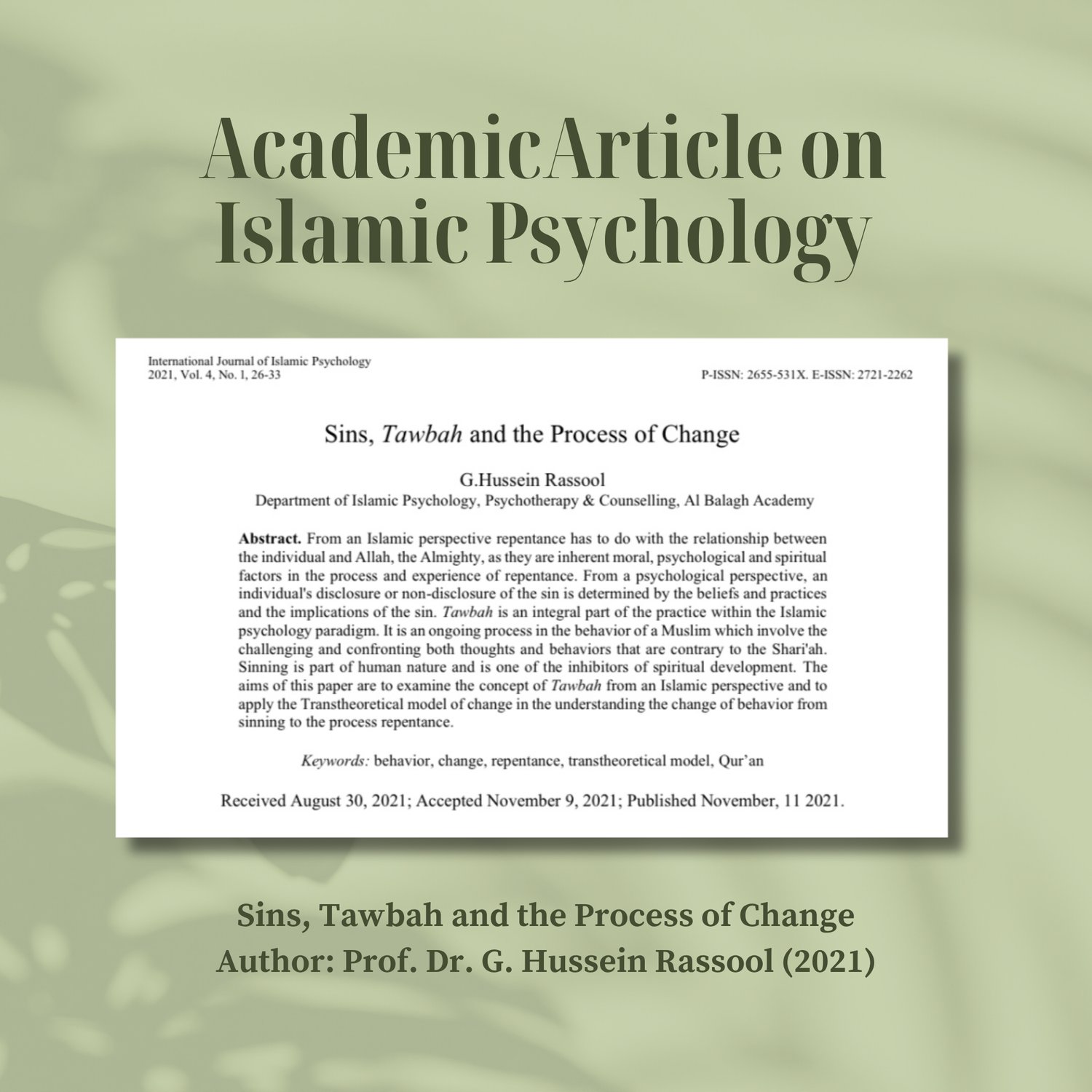
Sins, Tawbah and the Process of Change
The academic article Sins, Tawbah and the Process of Change, authored by Prof. Dr. G. Hussein Rassool (2021) integrates Prochaska’s Transtheoretical Model of Behavioral Change with the Islamic concept of Tawbah (repentance). Grounded in authentic Hadith and classical Islamic scholarship, it reinterprets psychological "behavior modification" through cognitive reframing, internal self-discipline (Nafs), and spiritual accountability.
Abstract: From an Islamic perspective, repentance has to do with the relationship between the individual and Allah, the Almighty, as they are inherent moral, psychological and spiritual factors in the process and experience of repentance. From a psychological perspective, an individual's disclosure or non-disclosure of the sin is determined by the beliefs and practices and the implications of the sin. Tawbah is an integral part of the practice within the Islamic psychology paradigm. It is an ongoing process in the behavior of a Muslim which involve the challenging and confronting both thoughts and behaviors that are contrary to the Shari'ah. Sinning is part of human nature and is one of the inhibitors of spiritual development. The aims of this paper are to examine the concept of Tawbah from an Islamic perspective and to apply the Transtheoretical model of change in the understanding the change of behavior from sinning to the process repentance.